
Most women don’t have a shopping problem. They have an overwhelm problem.
The wasted money, the unworn pieces, the wardrobe full of near-misses, are all symptoms of buying without a system. The fix isn’t to say, “I just need to spend less”. Instead, it’s a little thinking first.
Want to know how to overcome the problem? Read on for the tried-and-true process of an intentional wardrobe and stop wasting money.
Start With a Ruthless Clear-Out
Before a single new item enters consideration, everything that shouldn’t be there needs to leave. Not eventually. Now.
Go through EVERY category:
clothing
shoes (+ their accessories)
bags
hats, scarves, belts
jewellery
hosiery
lingerie and sleepwear
other.
If it doesn’t fit, doesn’t suit you, is damaged, uncomfortable, dated beyond saving, or no longer reflects who you are and how you live… it goes. The mantra I use personally: “Thank you and goodbye to my past self.” It acknowledges that the piece served a purpose once without requiring you to feel guilty for moving on from it.
This step is non-negotiable. You cannot accurately audit what you have while it’s buried under what you’re keeping out of obligation.
Define Your Actual Lifestyle
Before you can know what your wardrobe needs, you need an honest picture of your life as it actually is. Not as it was. Not as you’d been hoping (yet never actually achieving) for it to be. And yes, often this reality check comes with a little pain.
Map your week in broad categories:
work
social
active/fitness
casual
manual labour.
Assign a rough percentage to each. Do you attend several formal occasions each season? Make a note.
This becomes your baseline and proportional guide for how your wardrobe should be weighted. A woman working from home four days a week has fundamentally different wardrobe needs than one in client-facing corporate five days a week. An introverted homebody has a different wardrobe composition to an extroverted entrepreneur regularly on the speaker circuit. No results are wrong. But all need a wardrobe built around reality, not fantasy.
I will insert a caveat here: a relaxed lifestyle does not equal sloppy, damaged, ill-fitting, past-its-prime clothing. I will never sign off on that because of how deep the consequences go. A limit of one or two items, however, can be kept for manual labour such as garden work or painting.
Audit What You Have
With a clear wardrobe and a clear lifestyle picture, now look honestly at what remains. Where is there excess? Where are there gaps? Are there categories you’ve been neglecting entirely such as adequate work blouses, lingerie that doesn’t show under your clothes, shoes appropriate for the walking you actually do? This is the ethos behind the capsule wardrobe concept – what you have truly matches your needs.
Lingerie in particular gets overlooked in wardrobe audits. The wrong underwear can undermine even the most well-chosen outfit, not to mention the irritation from discomfort! It belongs in this review.
Note every gap specifically. Vague observations lead to vague purchases. A specific gap leads to a specific, considered solution.
The 15-Minute Wardrobe Reset
Get answers with this personalised style toolkit. No more overthinking.
Fast wins, simple decisions, clear alignment.
Plan Before You Purchase
Here’s where most women skip straight to shopping. Please don’t.
First ask: can an existing item be repurposed? Wearing clothing and accessories in unexpected combinations is genuinely creative and it often closes a gap without spending. A scarf that works as a belt, a blazer that crosses from work to weekend, shoes that bridge two outfit categories. Explore this seriously before reaching for your wallet. Purchasing (even second-hand) is the last resort, not the first response.
Identify your list of gaps: the item, it’s features, how many, preferred colours. You don’t have to be ridiculously specific, but you do need sufficient clarity so that when you consider an item, it’s an immediate match or not.
Research Thoroughly Before You Go Anywhere
If a genuine gap remains that requires a new purchase, research it properly online first. Look at multiple options across different price points, silhouettes to suit your body shape, and retailers. Develop a clear picture of exactly what you’re looking for before you step into a single store.
This step protects you from impulse. When you walk in knowing precisely what you need, you’re far less vulnerable to what’s simply in front of you.

Shop In-Store Where Possible
Then go in person if you are able. Assess the actual fabric weight, the true colour under real light, the fit on your specific body. Online shopping makes it dangerously easy to over-purchase and even easier to keep things that don’t quite work because the return process feels like too much effort. Those “good enough” pieces are exactly how a wardrobe fills up with items that never get worn.
In-store shopping slows the whole process down. By trying on you will know if something is an immediate “yes!”. That’s the point.
One In, One Out
Once your wardrobe reaches a stable, well-curated baseline, protect it. My personal rule:
If something new comes in, something leaves.
Not as punishment, but rather as discipline. Every item needs enough space to be properly seen, appreciated, and worn. A crowded wardrobe creates decision fatigue, quietly encourages neglect which can turn into a slippery slope of hoarding.
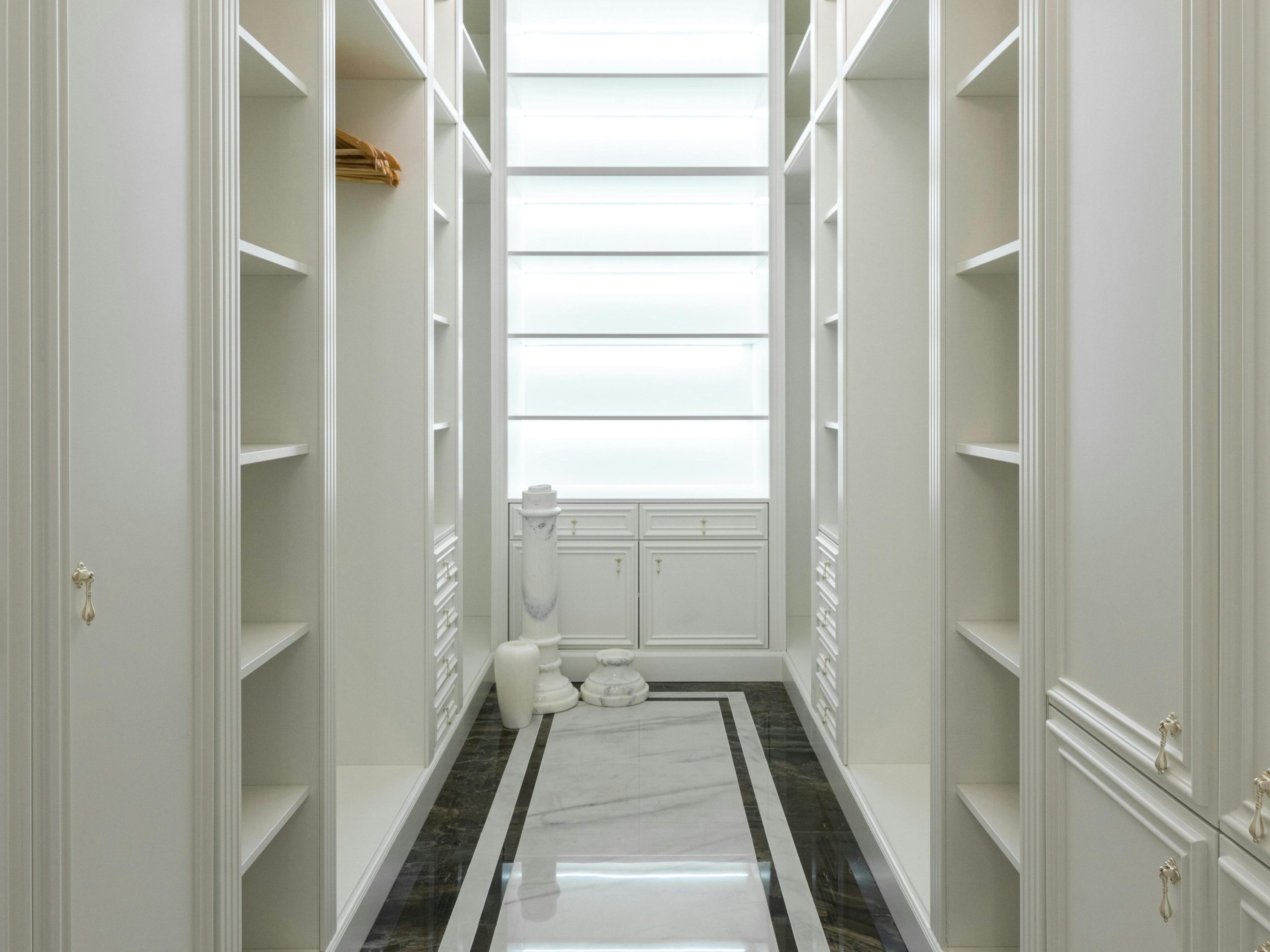
Notice that the most luxurious environments – hotel suites, high-end boutiques, beautifully designed homes – are always uncluttered, almost sparse at times. That’s not by accident. Every item has been chosen deliberately and maintained with care. The same principle applies to your wardrobe. Clutter is the enemy of both mental clarity and genuine style.
The Bigger Principle
Look at how slow this entire process is. Deliberately so. Every step creates another opportunity to abandon a “want” and stay focused on a genuine “need.” That sustained deceleration is what keeps you in a maintenance mindset rather than a consumption spiral. Consumption spirals, left unchecked, too easily build into something that feels much harder to untangle.
The women who waste least on clothes are actually not the ones with the most restraint. They’re the ones with the most focused clarity… about their lives, their bodies, their colour palette, their personal style. That is what transforms shopping from reactive to intentional. For them, shopping is actually a process of careful curation.
Stop wasting money. And stop buying clothes you don’t wear. If you’d like support building that intentional wardrobe, a Personal Style Consultation or Colour Anaysis is a great start. Or map the foundations in a package so every purchase in your future has a clear place to land.
I offer a wide range of personal styling services. For those outside Brisbane, online service options are also offered.